
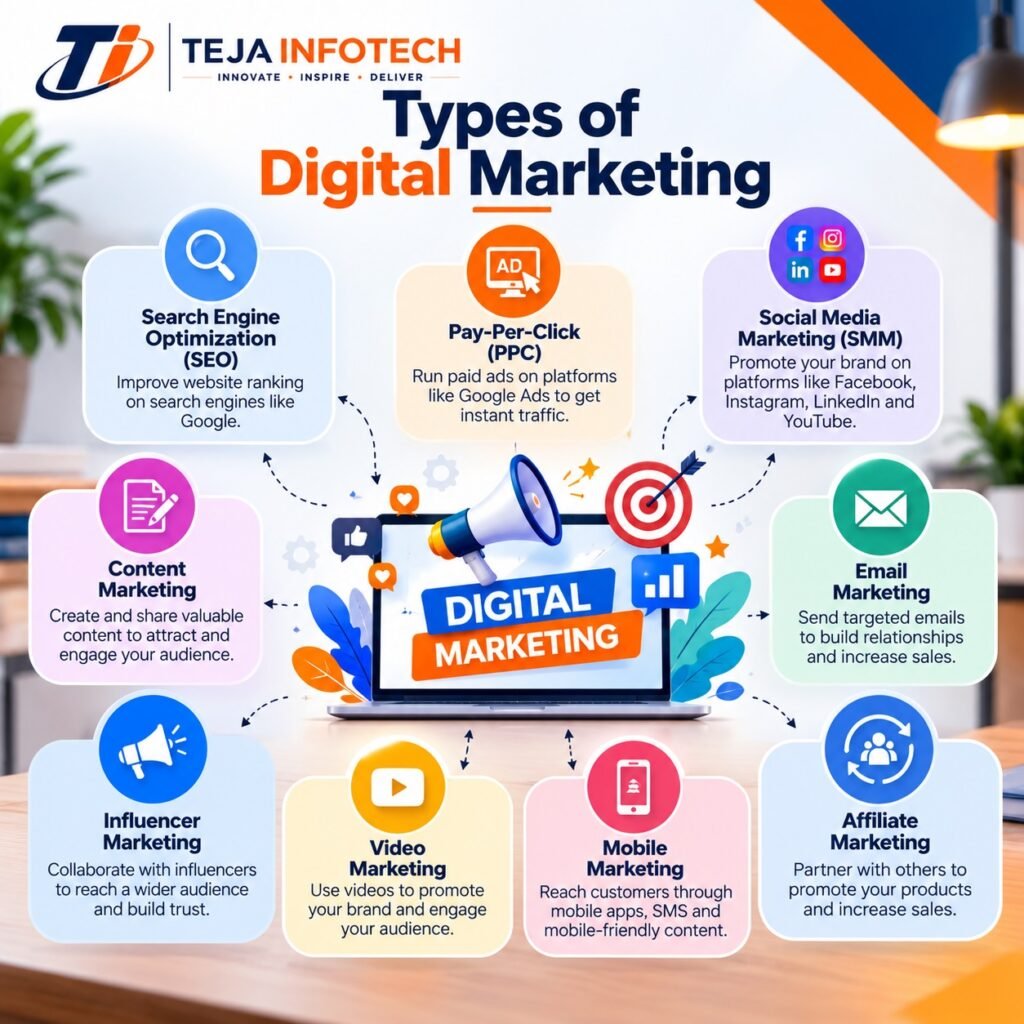
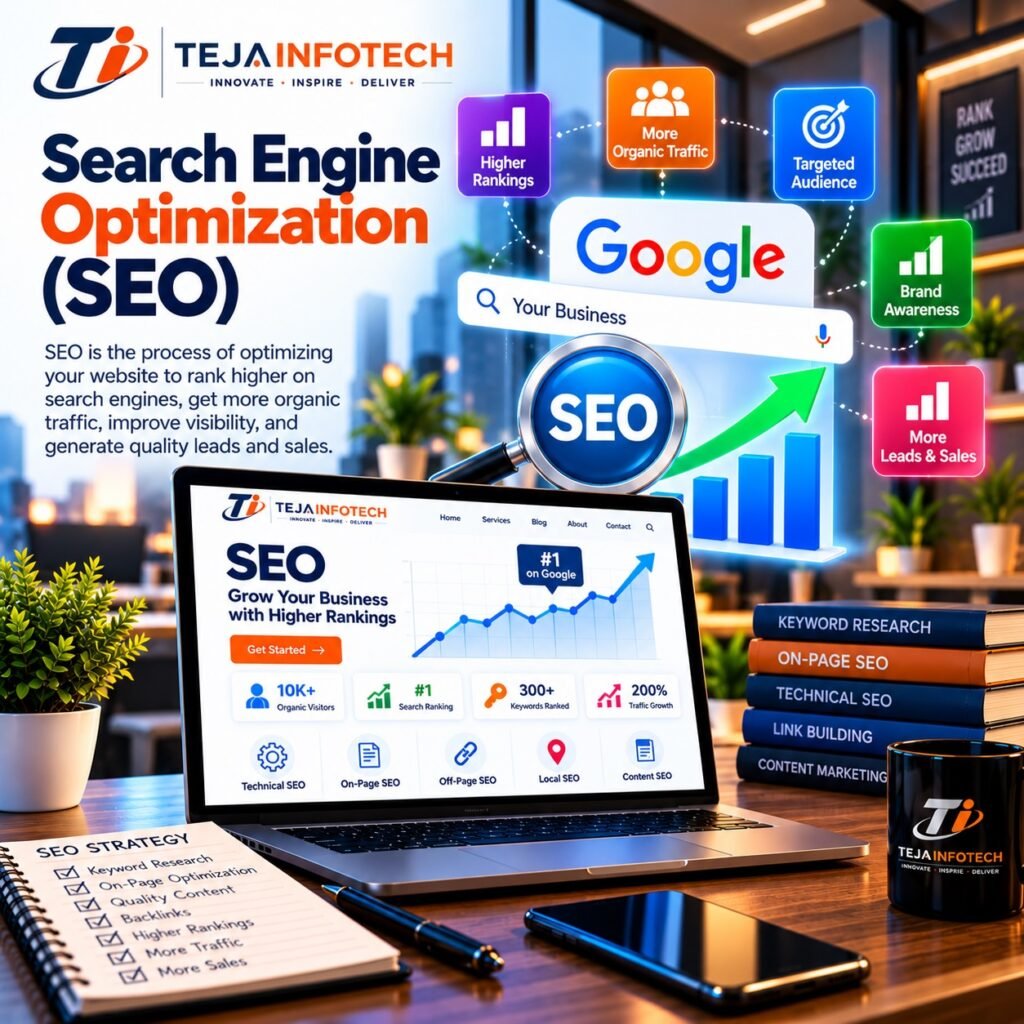
Search Engine Optimization (SEO) is one of the most important digital marketing strategies used to improve a website’s visibility on search engines such as Google, Bing, and Yahoo. SEO helps websites appear higher in search results when people search for products, services, information, or solutions related to their business.A well-planned SEO strategy can help a website attract more organic traffic, reach the right audience, build brand credibility, and generate more leads and sales without relying entirely on paid advertising.
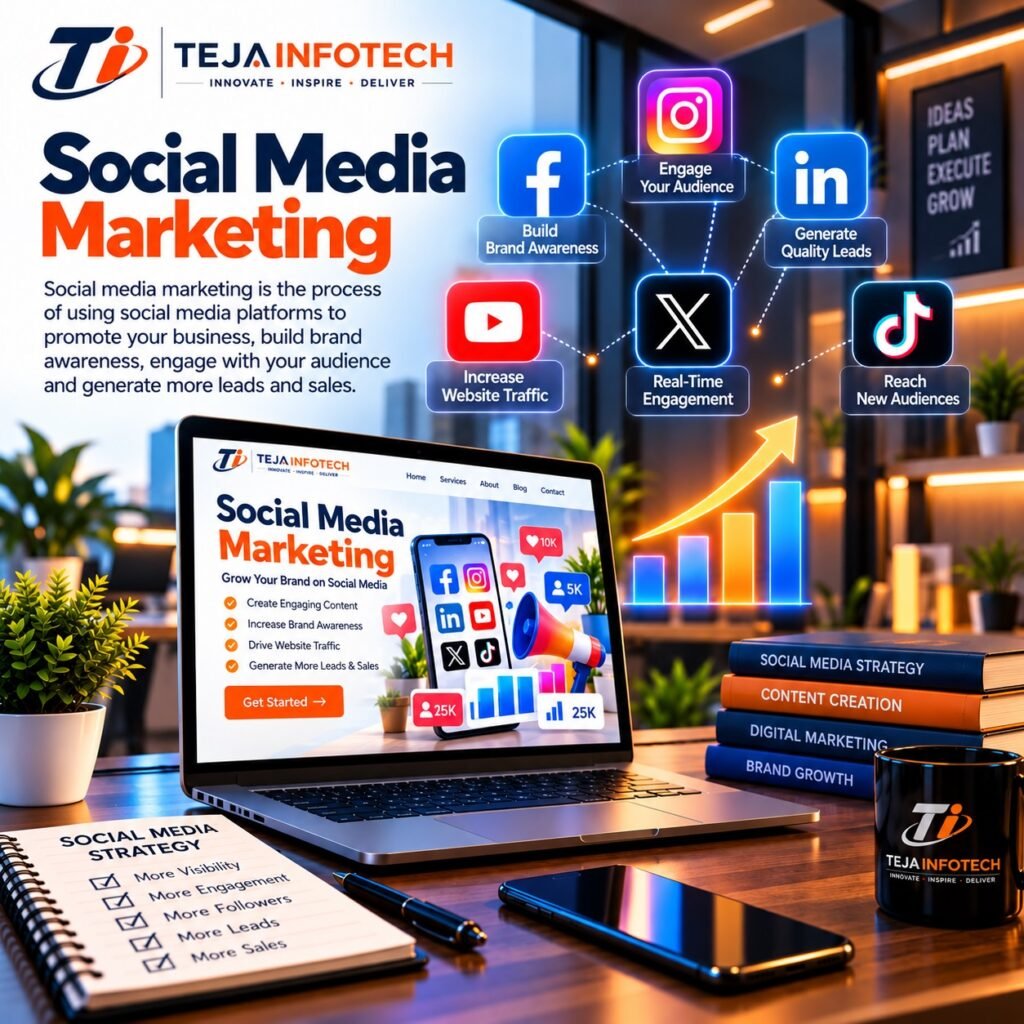
Social Media Marketing (SMM) is an important part of modern digital marketing. It involves using social media platforms to promote a business, build brand awareness, connect with customers, share valuable content, generate leads, and increase sales.Platforms such as Facebook, Instagram, LinkedIn, YouTube, X (Twitter), Pinterest, and TikTok provide businesses with powerful opportunities to communicate directly with their target audience.A successful social media marketing strategy is not simply about posting content regularly. It involves understanding the target audience, creating valuable content, building relationships, running effective campaigns, analyzing performance, and continuously improving the strategy.
Social media has become an important communication channel between businesses and customers. People use social platforms not only to communicate with friends and family but also to discover brands, research products, read reviews, watch videos, and make purchasing decisions.Social Media Marketing helps businesses reach potential customers where they already spend their time online.
Type your paragraph here
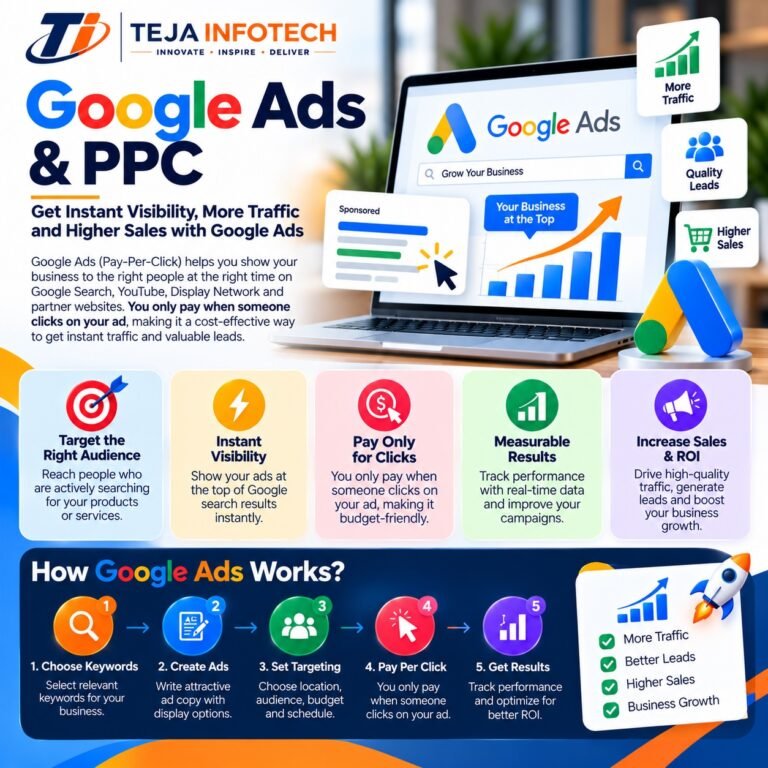
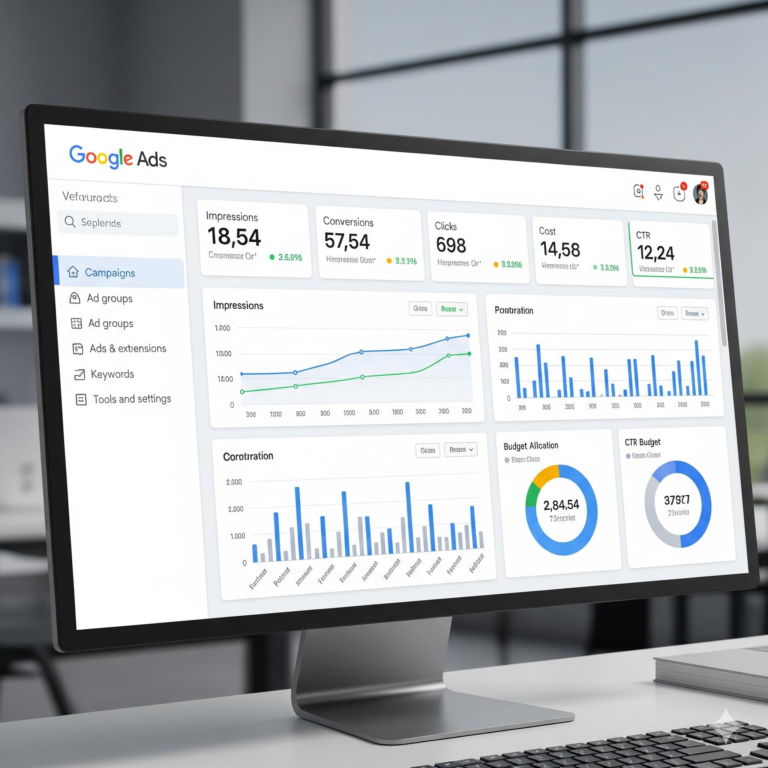
Google Ads and Pay-Per-Click (PPC) advertising are powerful digital marketing strategies that help businesses reach potential customers through paid online advertisements. Unlike SEO, which primarily focuses on earning organic search visibility over time, PPC allows businesses to pay for advertising placements and reach relevant audiences more quickly.Google Ads is one of the most widely used PPC advertising platforms. Businesses can create advertisements that appear when people search for products or services related to their business. PPC campaigns can also be used across other advertising placements, depending on the campaign type and platform.
Content marketing focuses on creating useful content such as:
Email Marketing is one of the most effective digital marketing strategies for communicating directly with customers and potential customers. It involves sending targeted emails to a group of subscribers or customers to share information, promote products and services, generate leads, build relationships, and encourage conversions.Unlike many digital channels where businesses compete for attention in public feeds, email marketing provides a direct communication channel with people who have chosen to receive messages from a business.A well-planned email marketing strategy can help businesses increase customer engagement, nurture leads, promote products, build customer loyalty, and generate repeat business
Email Marketing is the process of using email to communicate with customers, prospects, subscribers, or other relevant audiences for marketing and relationship-building purposes.
Businesses can use email marketing to send:
Affiliate Marketing is a performance-based digital marketing strategy in which a business rewards individuals, publishers, creators, or other partners for generating desired results such as sales, leads, or qualified referrals.
It is a popular marketing model because businesses can work with external partners to promote their products or services while affiliates can earn commissions by recommending products they genuinely choose to promote.
Affiliate marketing can be used by ecommerce businesses, software companies, service providers, content creators, bloggers, influencers, comparison websites, and many other types of businesses.
Affiliate Marketing is a marketing arrangement between a merchant, an affiliate, and often an affiliate network or tracking platform.
The affiliate promotes a company's product or service using a unique tracking link. When a customer clicks the link and completes a qualifying action, the affiliate may receive a commission according to the terms of the affiliate program.
A simple affiliate marketing process looks like this:
Business → Affiliate → Customer → Conversion → Commission
For example, a technology blogger may write an article about the best laptops and include affiliate links to products. If a reader clicks an affiliate link and completes an eligible purchase, the blogger may receive a commission.