
(Search Engine Optimization (SEO) is one of the most important digital marketing strategies for improving a website’s visibility on search engines like Google and Bing. SEO helps websites appear higher in search results when people search for products, services, information, or solutions related to their business.A successful SEO strategy includes keyword research, On-Page SEO, Off-Page SEO, Technical SEO, quality content, internal linking, backlinks, website speed, mobile optimization, and a good user experience. By implementing these techniques correctly, businesses can increase organic traffic, reach their target audience, build online credibility, and generate more leads and conversions.In this complete SEO guide, you will learn what SEO is, why SEO is important, how search engines work, the different types of SEO, important SEO techniques, keyword research, backlinks, and practical strategies to improve your website’s Google ranking.
SEO stands for Search Engine Optimization. It is the process of optimizing a website to improve its visibility in organic search results.
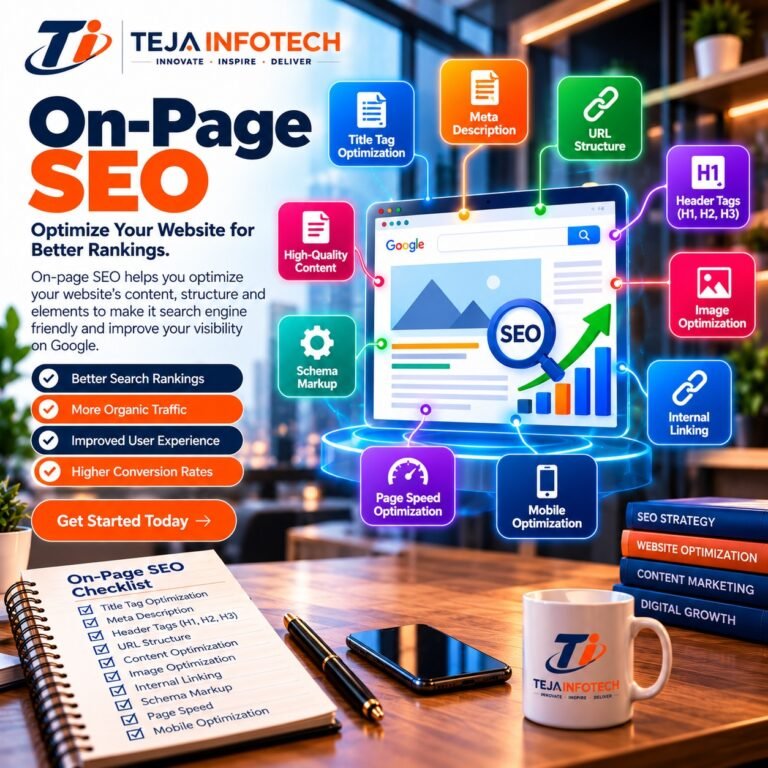
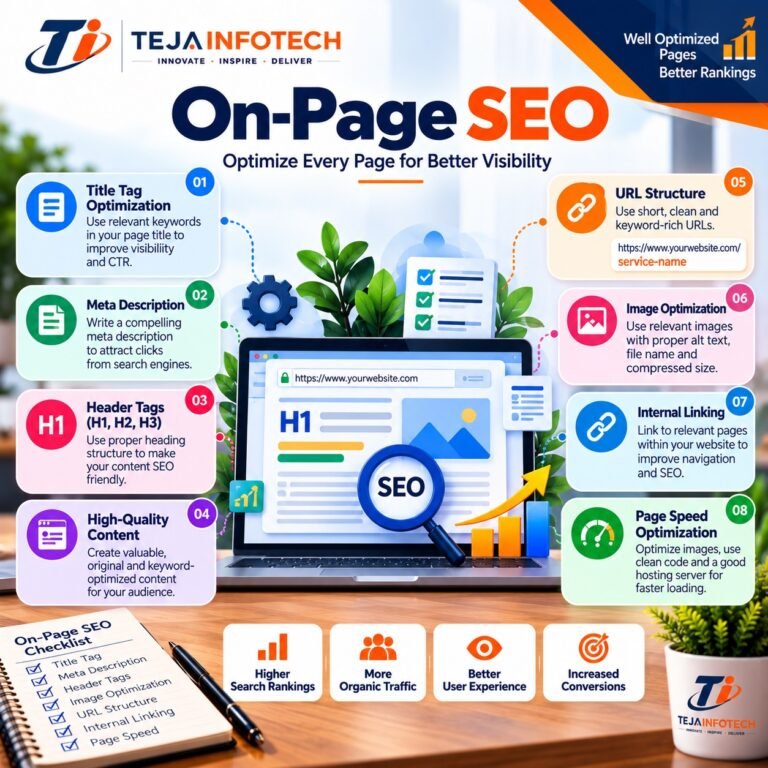
On-Page SEO focuses on optimizing the content and elements that exist directly on your website.
Important On-Page SEO factors include:
Keywords are the words and phrases people type into search engines. Researching and strategically using relevant keywords helps search engines understand the topic of your page.
For example:
“Digital Marketing Services”
Keywords should be used naturally throughout the content rather than being unnecessarily repeated.
The title tag tells search engines and users what a webpage is about. It is one of the important elements of On-Page SEO.
A good title should:
A meta description provides a short summary of a webpage. Although it is not generally considered a direct ranking factor, a well-written description can encourage users to click your result.
A good meta description should:
Proper headings make content easier to understand for both users and search engines.
A typical structure includes:
A webpage should generally have a clear and logical heading hierarchy.
SEO-friendly URLs are short, descriptive, and easy to understand.
Internal links connect one page of your website to another page on the same website.
For example, an SEO blog can link to pages such as:
Internal linking helps users discover related content and helps search engines understand the structure of your website.
Images can improve the visual experience of a webpage, but large or poorly optimized images can negatively affect loading speed.
Image SEO includes:
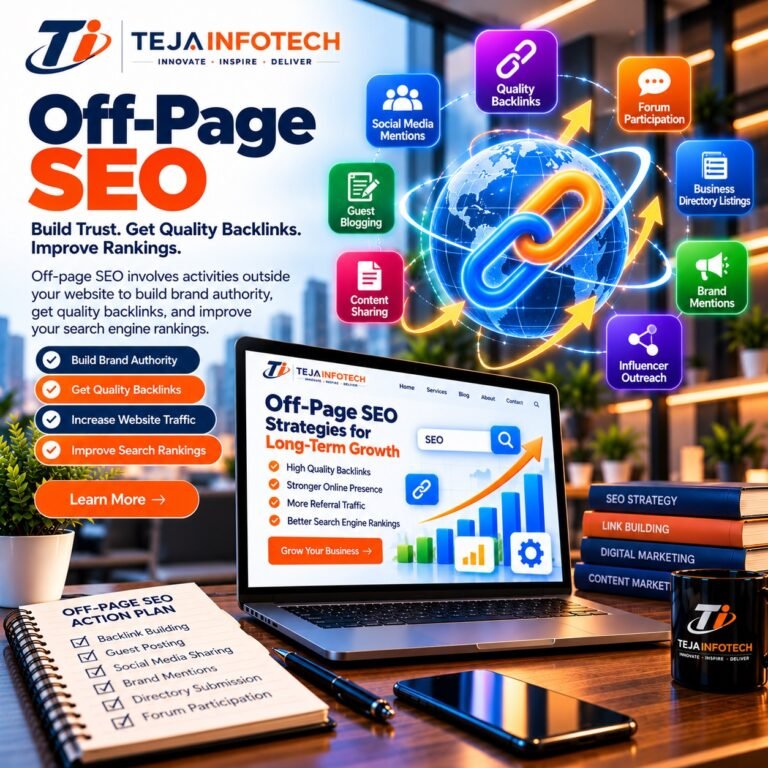
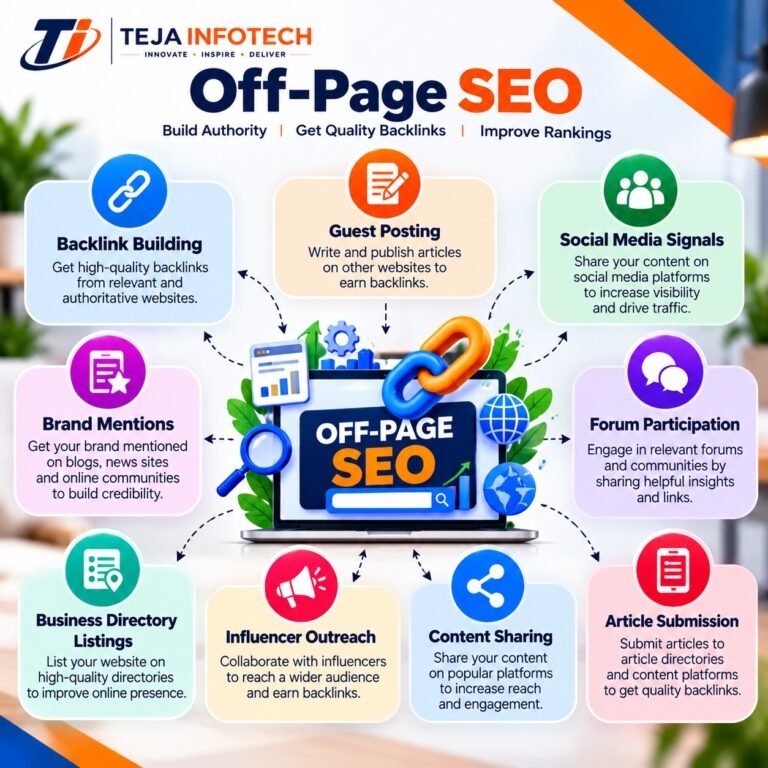
Off-Page SEO refers to activities performed outside your website to improve its authority, reputation, and visibility.
Important Off-Page SEO activities include:
Backlinks are links from other websites pointing to your website. High-quality and relevant backlinks can help strengthen your website's authority.However, quality is more important than quantity. Obtaining many low-quality or spammy links can be harmful.
Guest posting involves publishing useful content on relevant external websites and, where appropriate, earning a relevant link or brand mention
Sharing website content through social media platforms can help increase exposure, traffic, and brand awareness.Social media activity itself is not simply a substitute for SEO, but it can support content distribution and overall digital visibility.
When other websites, publications, or online communities mention your brand, it can contribute to your overall online presence and reputation.
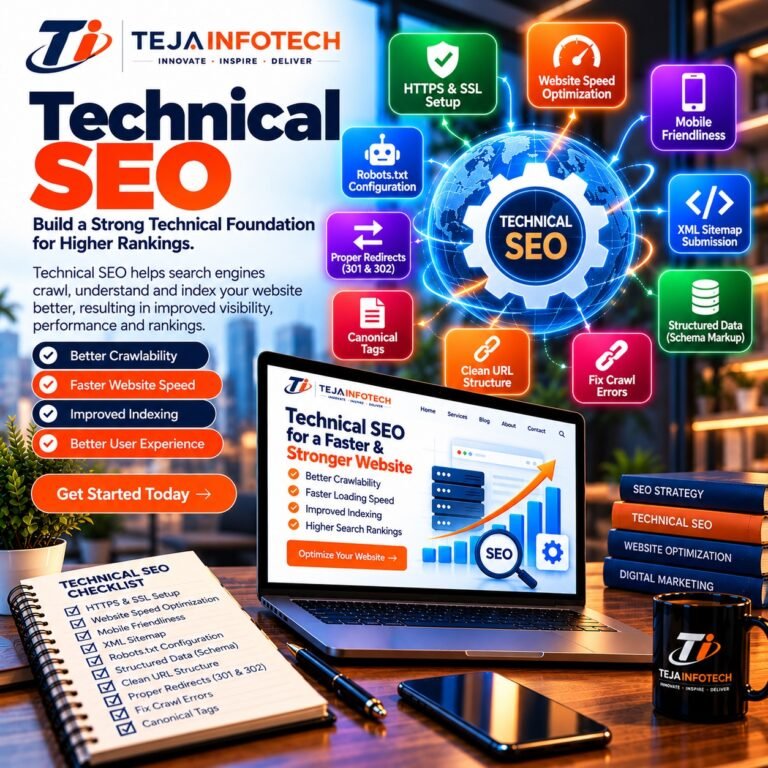
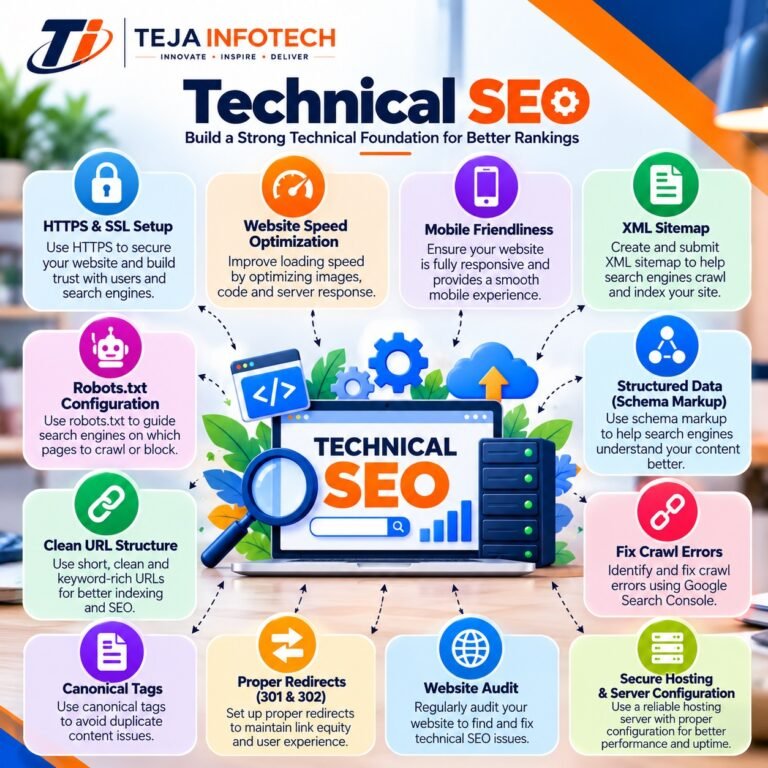
Technical SEO focuses on improving the technical foundation of a website so that search engines can efficiently crawl, understand, and index its pages.
Important technical SEO factors include:
A fast website provides a better user experience and can support better search performance.
Website performance can be improved by:
A large number of users access websites through smartphones. Therefore, websites should be responsive and provide a good experience across mobile, tablet, and desktop devices.
An XML sitemap provides search engines with information about important URLs on your website. It can help search engines discover and understand the structure of your site.
The robots.txt file provides instructions to search engine crawlers about which areas of a website they may or may not crawl
HTTPS encrypts communication between a user's browser and the website. A secure website is important for user trust and modern web standards.
Canonical tags help search engines understand the preferred version of a page when multiple URLs contain similar or duplicate content